
You send out application after application. You tweak your CV a little. You write a new cover letter. You hit submit. And then… nothing.
No email. No phone call. Just silence.
After a while, you start asking yourself the same questions over and over. Is my CV bad?
Am I not qualified?
Is something wrong with me?
Why is everyone else getting interviews but me?
Here is the truth.
You are not alone.
This happens to thousands of job seekers every single day. And most of the time, it is not because you are “not good enough.” It is because you are missing something simple.
A gap. A disconnect between what you are offering and what employers actually want.
The problem is, you cannot fix what you cannot see.
That is where career gap analysis comes in. Think of it like going to a doctor. You do not just say “I feel sick” and hope to get better. You describe your symptoms. The doctor runs tests. They find out exactly what is wrong. Then they give you the right medicine.
Your job search needs the same approach. Stop guessing. Start diagnosing.
Step 1: Stop and Look at Your Process Honestly
Before we dig into gaps, let us look at how you are applying right now. Be honest with yourself.
Ask these simple questions:
- Do I read the full job description carefully before applying?
- Do I change my CV to match each job, or do I send the same one every time?
- Do I know for sure that I meet the main requirements of the jobs I apply for?
- Do I apply to any job that seems “close enough” and hope for the best?
If you answered “no” to some of these, do not feel bad. Most job seekers do the same thing. We get tired. We get desperate. We start spraying applications everywhere hoping one will stick.
But here is the hard truth. Spraying and praying does not work. It just leads to more silence and more frustration.
The first step in gap analysis is admitting that your process might have gaps, not just your skills.
Step 2: Check Your Role Fit (Are You Applying to the Right Jobs?)
Here is a tough question. Are you applying to jobs you actually qualify for?
I am not asking if you want the job. I am asking if your background, experience, and skills match what the employer listed as “required.”
Many job seekers apply to jobs where they only meet half the requirements. They think “maybe they will train me” or “I can learn on the job.” Sometimes that works. Most of the time, it does not.
Do a quick role fit check on your last five applications:
- Look at the job description again.
- Highlight the things they said are “required” (not “preferred,” but “required”).
- Count how many of those things you truly have.
If you are missing more than one or two required items, that job was probably a long shot. And every long shot you take is time and energy you could have spent on jobs where you are a real contender.
The gap: You might be wasting applications on jobs that were never a good fit from the start.
Step 3: Check Your CV Targeting (Does Your CV Speak Their Language?)
Imagine you are looking for a mechanic who knows how to fix Toyota cars. Someone gives you a CV that talks all about fixing motorcycles. Would you call them? Probably not. Even though both work on vehicles, the specific match is not there.
Employers think the same way. They have a problem to solve. They need someone with specific skills. They scan CVs looking for their language.
Do a CV targeting check:
- Pick one job you applied for recently.
- Look at the job description. What words do they use? What skills do they keep mentioning?
- Now look at your CV. Do you use the same words? Do you talk about the same skills?
If your CV uses different language than the job description, the recruiter might scan right past it without realizing you are a match. You have the skills, but you did not show them in a way they recognize.
The gap: Your CV might not be speaking the employer’s language, even if you are qualified.
Step 4: Check Your Skill Gaps (What Are You Missing?)
This is the big one. And it is the hardest to see on your own.
Sometimes we think we are ready for a job, but we are missing key skills that employers care about. Not just technical skills like software or machines. Soft skills too. Communication. Problem solving. Working with others.
The tricky part is, employers rarely tell you what you are missing. They just do not call.
Do a skill gap check:
- Look at a job description for your dream role.
- Make two lists. One list is skills you have. One list is skills they ask for that you are not sure about.
- Be honest. Do you really have those skills? Or do you just have a little experience?
For example, a job might ask for “strong communication skills.” You might think “I talk to people every day, so yes.” But maybe they mean writing professional reports. Or giving presentations to clients. Or handling difficult conversations. “Communication” can mean many different things.
The gap: You might be missing specific skills that employers expect, and you do not even know it.
Step 5: The “Readiness Score” Concept
Now let me introduce you to a simple idea that changes everything.
Imagine if you could get a score that tells you, clearly and honestly, how ready you are for the job market. Not a guess. Not your friend’s opinion. A real score based on real checking.
This score would look at:
- Do you meet the basic requirements for jobs in your field?
- What specific gaps do you have in your skills?
- Where are you losing opportunities without knowing it?
This is what we call a readiness score. It is like a report card for your job search. It does not judge you. It just shows you where you stand and what to work on.
Think about how useful that would be. Instead of guessing why you are not getting interviews, you would have clear answers. Instead of feeling lost, you would have a roadmap.
Your Personal Gap Analysis Checklist
Here is a simple checklist you can use right now to start your own diagnosis. Go through each question and answer honestly.
About Your Applications:
- Do I only apply to jobs where I meet most of the required qualifications?
- Do I read each job description fully before applying?
- Do I customize my CV for each job, or send the same one?
About Your CV:
- Does my CV use similar words and phrases as the jobs I want?
- Does my CV show results with numbers, not just list duties?
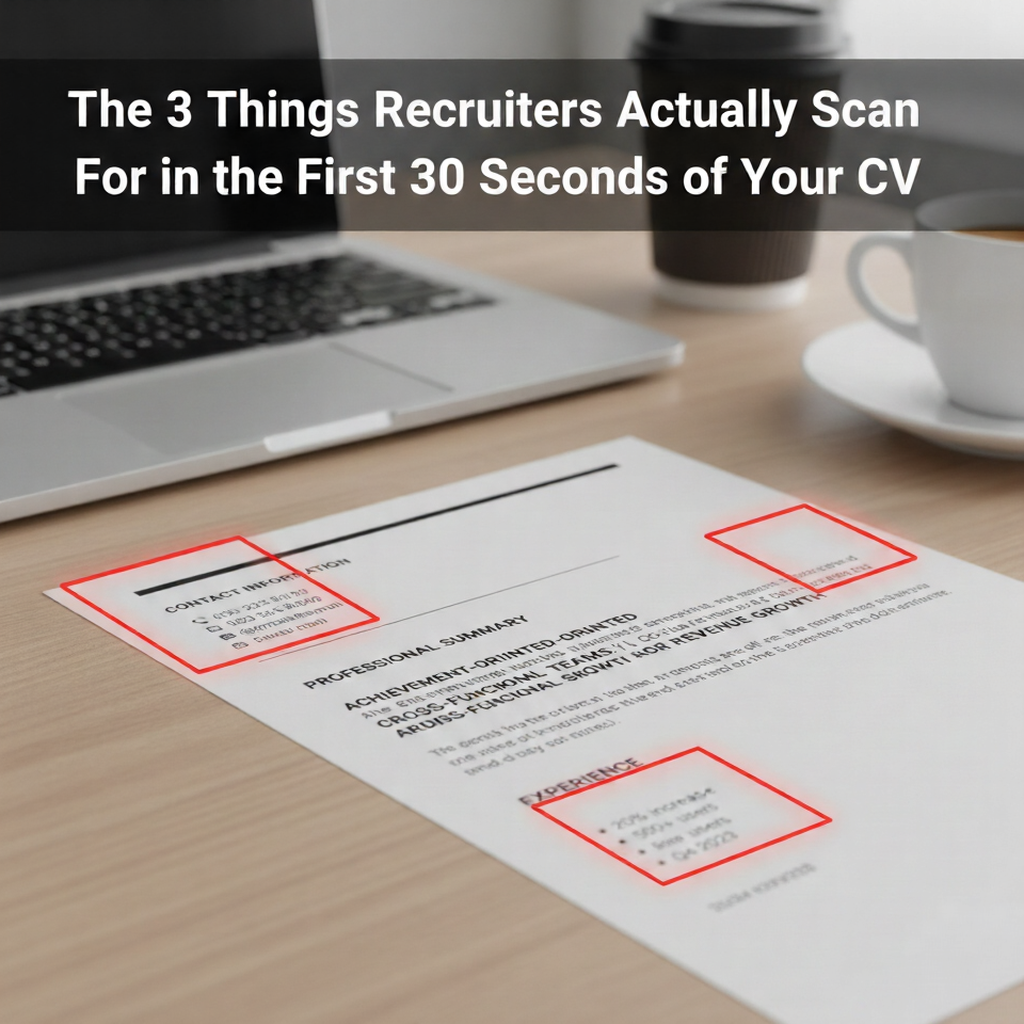
- Can someone understand my main strengths in 30 seconds?
About Your Skills:
- Do I know what skills are most important for my target job?
- Have I honestly checked my communication and soft skills lately?
- Do I know my strengths and my weaknesses clearly?
If you checked “no” to any of these, you have found a gap. Good. Now you know what to work on.
The Problem with Self-Diagnosis
Here is the honest truth. Doing this checklist yourself is helpful. But it is also limited.
Why? Because you are judging yourself. And we are all bad at judging ourselves. We either think we are better than we really are, or we think we are worse. We have blind spots. Things we cannot see because we are too close to them.
This is exactly why at TLTD TryMe, we built tools that give you an outside view.
Our Basic Requirements Test is a quick check that tells you if you meet the essentials for jobs in your field. It gives you an instant readiness score and shows you exactly where you are losing opportunities without knowing it.
Our Skills Assessment Test goes deeper. It evaluates your actual communication skills and core soft skills. Not what you think about yourself. Real checking. You get a complete breakdown of your strengths and your gaps, plus simple steps to improve.
Think of it like this. You can check your own blood pressure at home with a cheap machine. But if you really want to know your health, you go to a lab for proper tests. The same is true for your career.
Your Next Step
Stop guessing. Stop hoping. Stop sending applications into the dark and praying for a response.
Start diagnosing.
Find out exactly where your gaps are. Get a clear readiness score. Know what to fix and how to fix it.
[Take the Free Basic Requirements Test today] . It takes two minutes. It is completely free. And it will give you the first clear look at where you really stand.
Once you know your gaps, you can close them. Once you close them, the interviews will come. Not because you got lucky. Because you got ready.
Your career is too important to leave to guesswork. Get your diagnosis today.